THIN PLACE
Concept and Choreography
Mirko Ingrao
Dancers
Chiara Bergamini
Debora Di Biagi
Ya Chin Huang
Christian Lavigne
Blai Lòpez Sànchez
Matisse Maitland
Yester Mulens Garcìa
Jacob Noble
Maya Tenzer
Choreographic Assistance
Tyrel Larson
Willer Rocha
Lights
Ingo Joss
Sound Design
Mirko Ingrao
Text
Mariangela Gualtieri
Voice
Francesca Cinalli
Music
Eric Whitacre
Ezio Bosso
Costumes
Kerstin Laube
Video
Siegerbusch Film and Mirko Ingrao
Pictures
Thomas Obermeier and Nik Schölzel
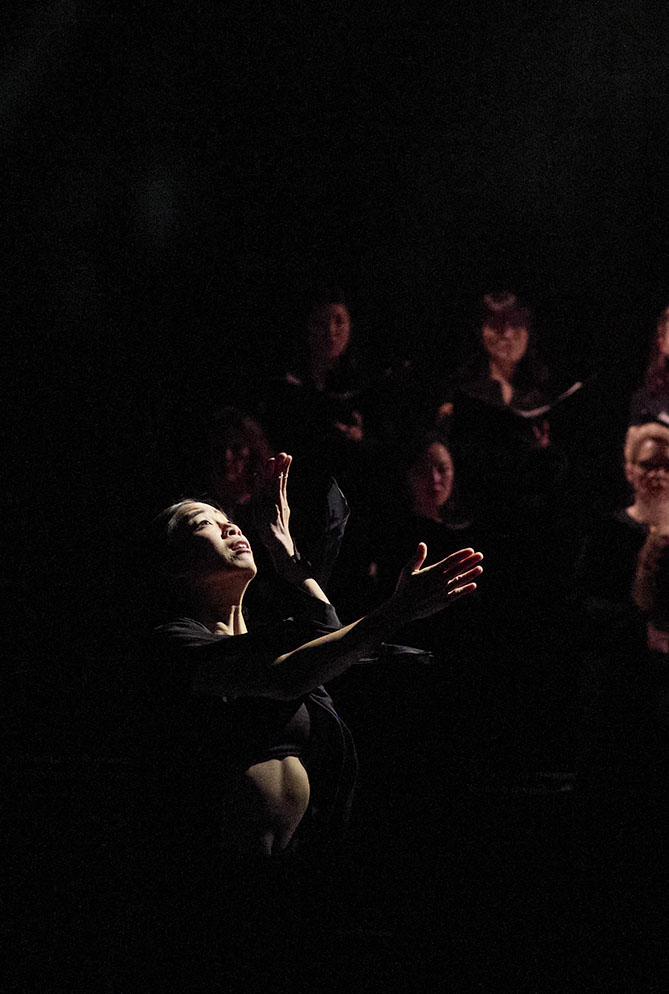
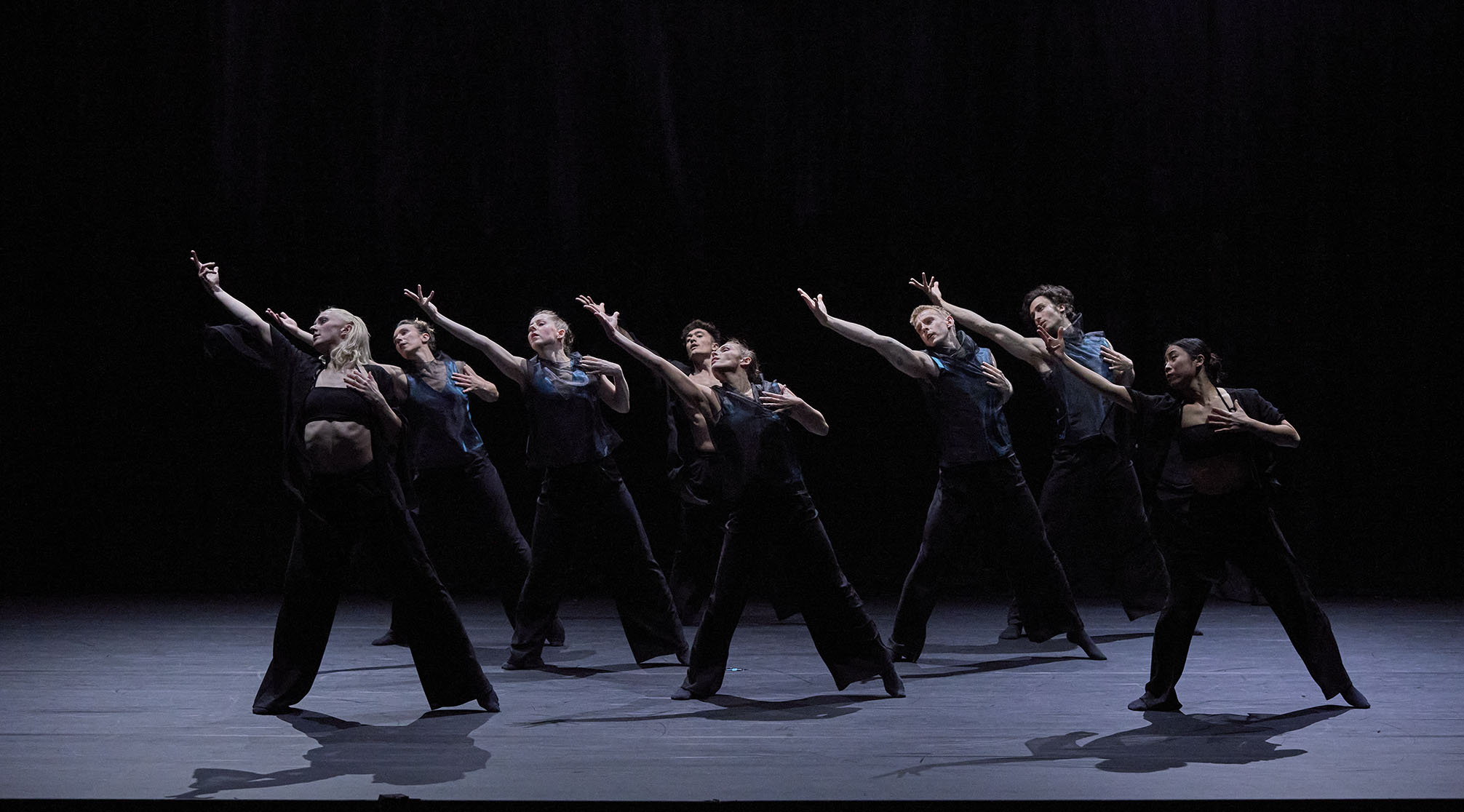
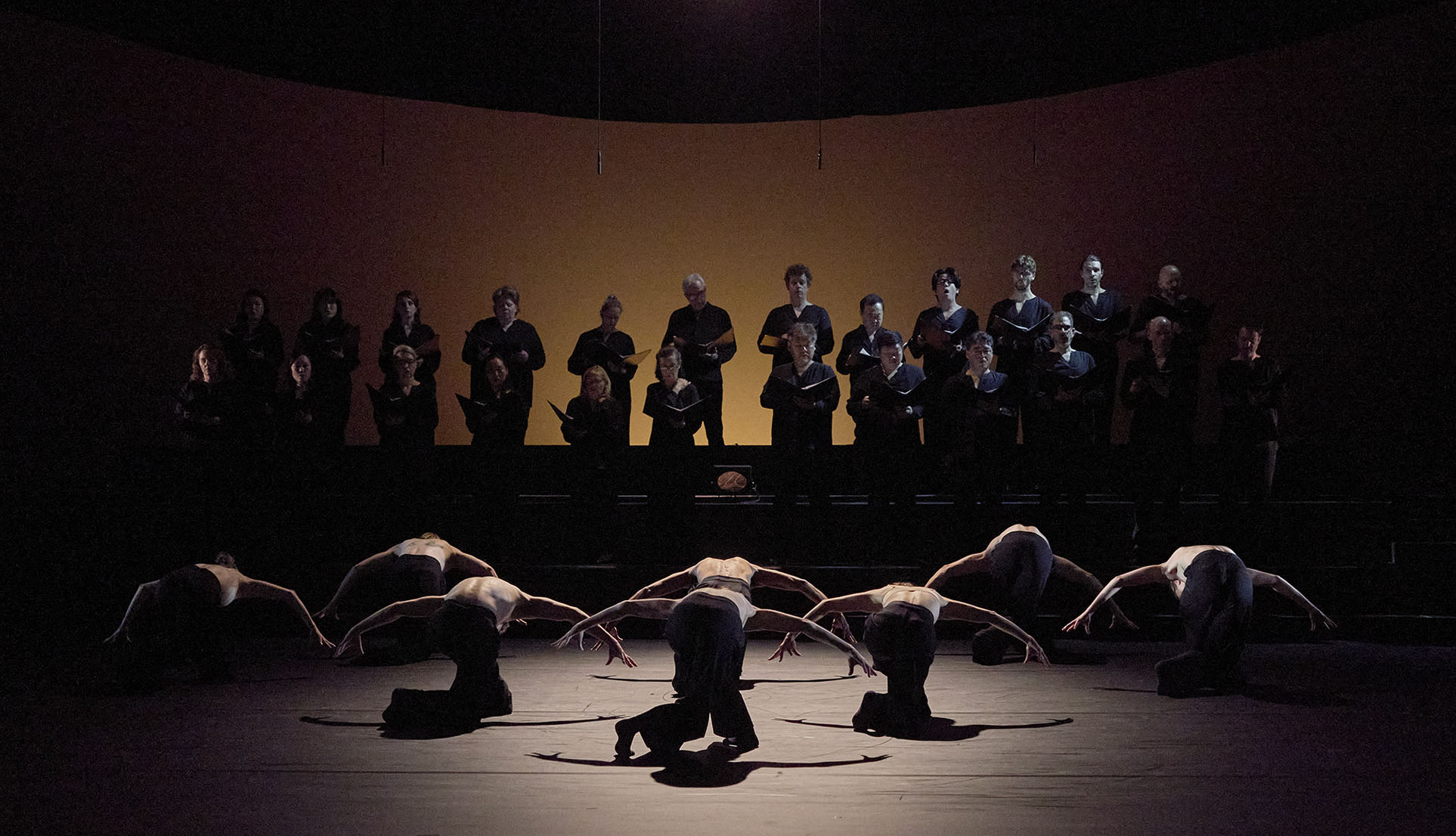
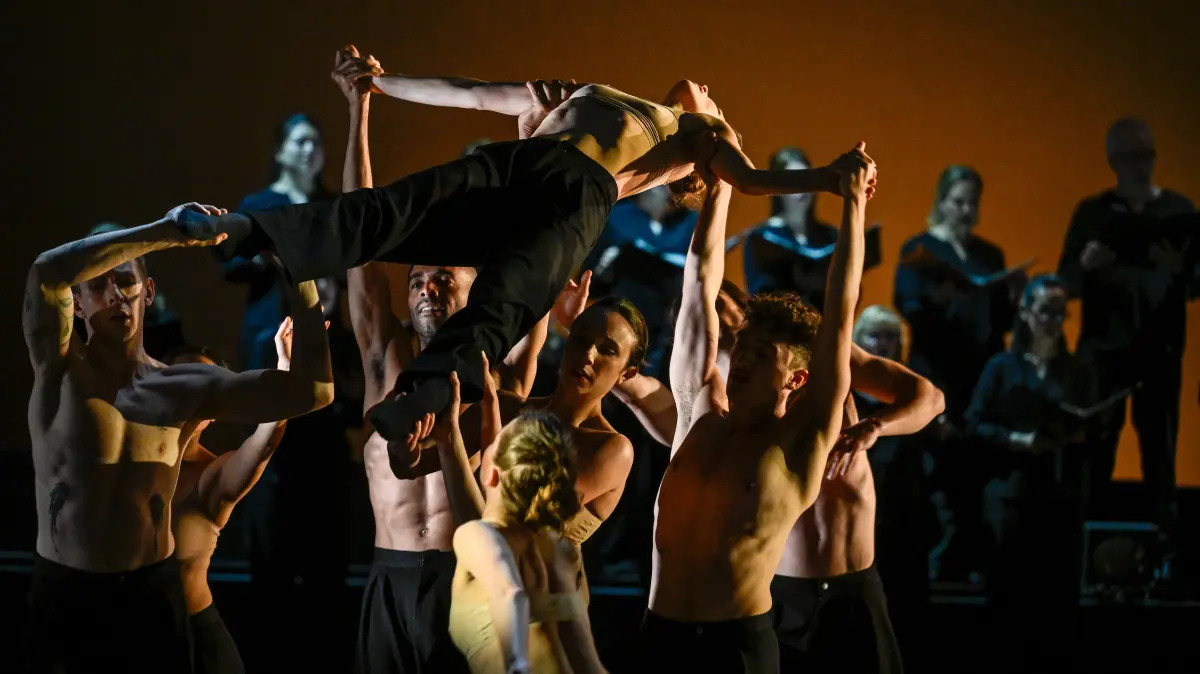
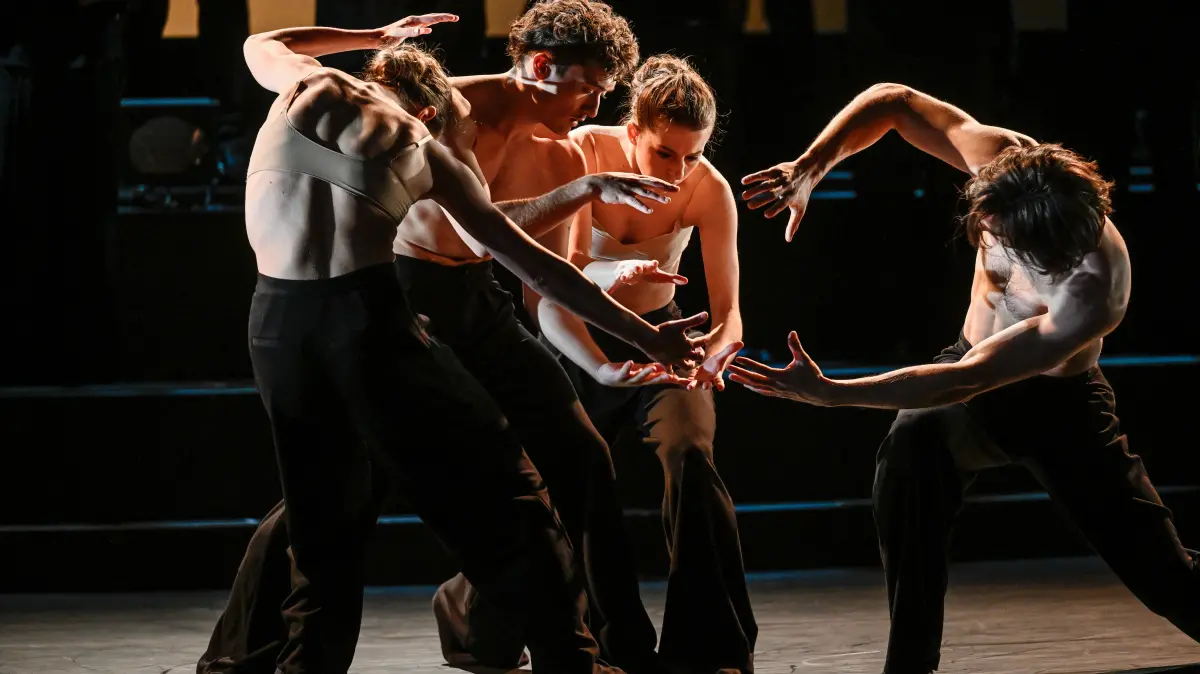
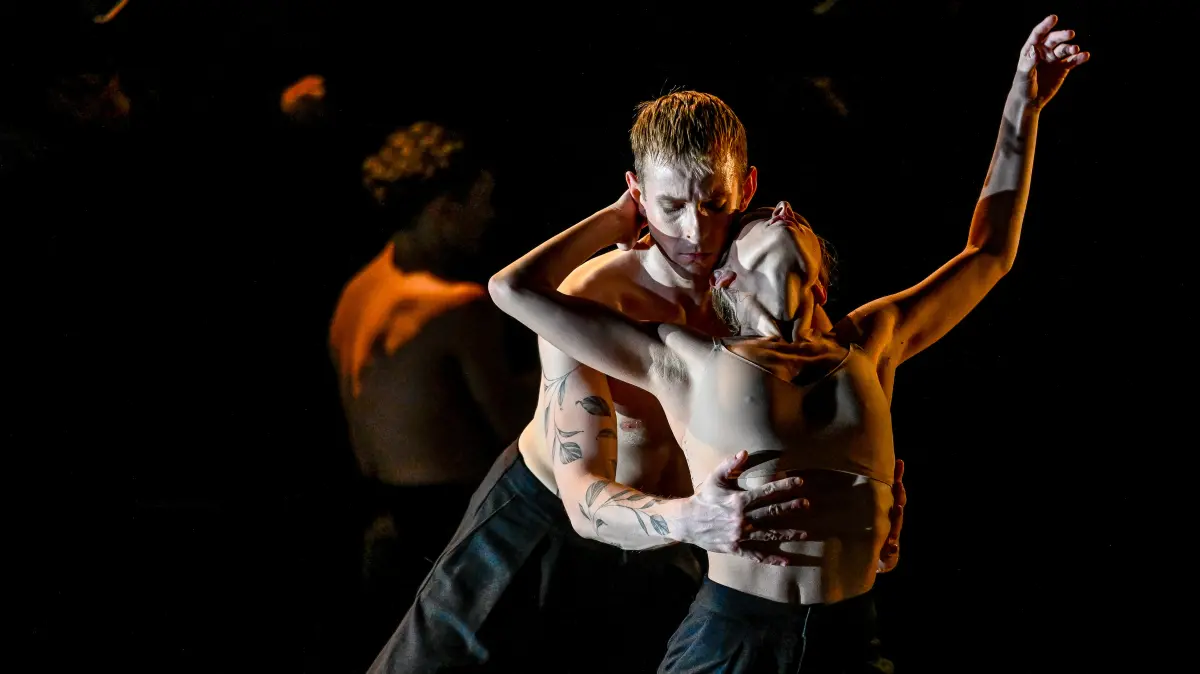
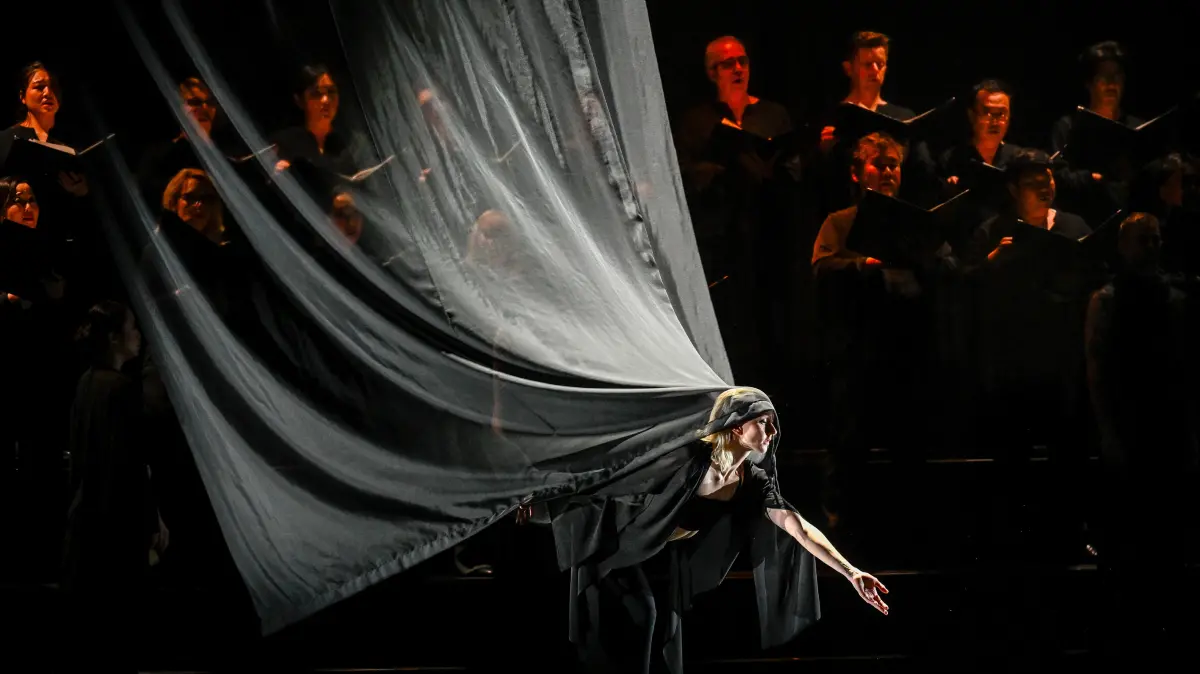
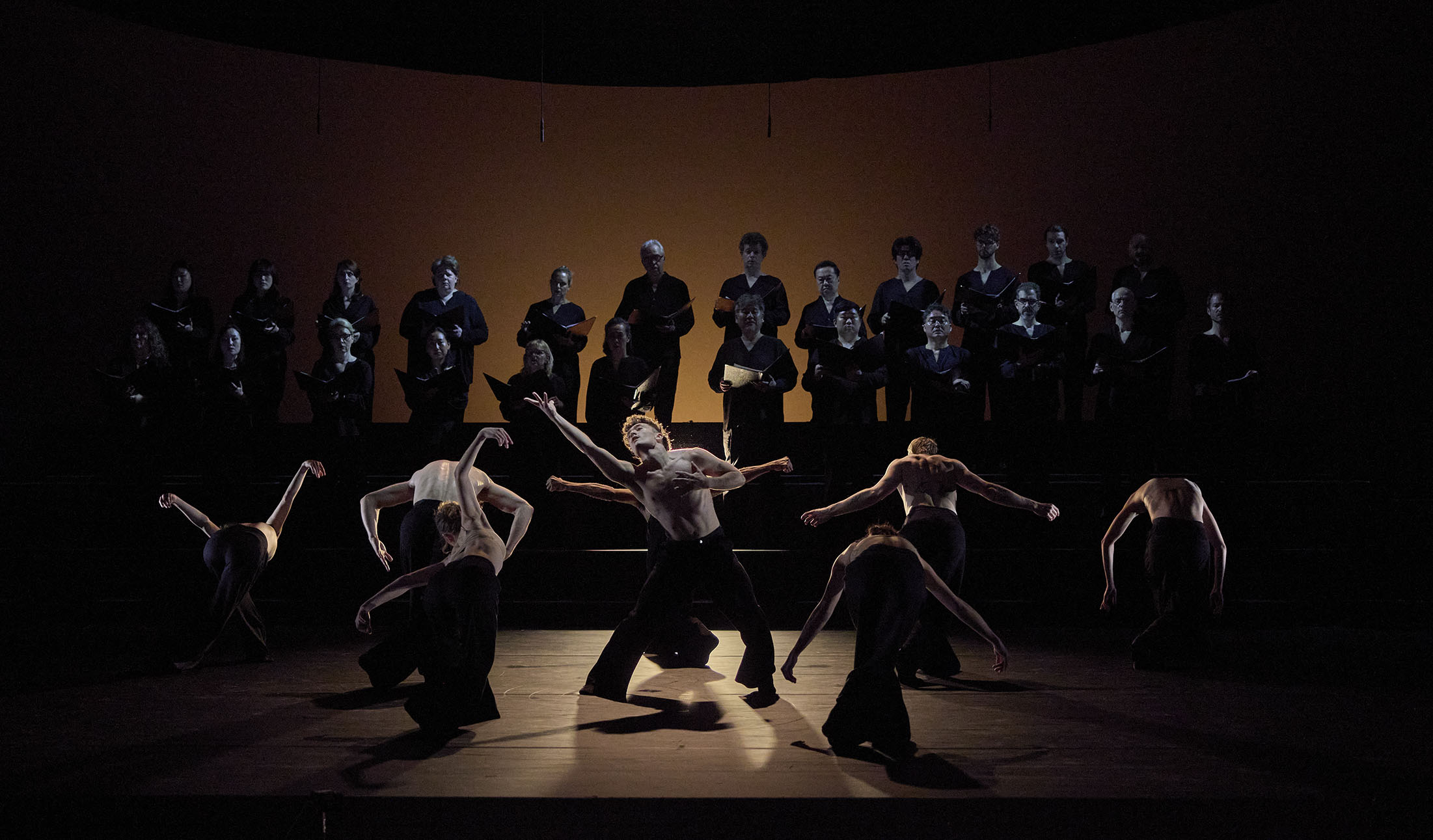
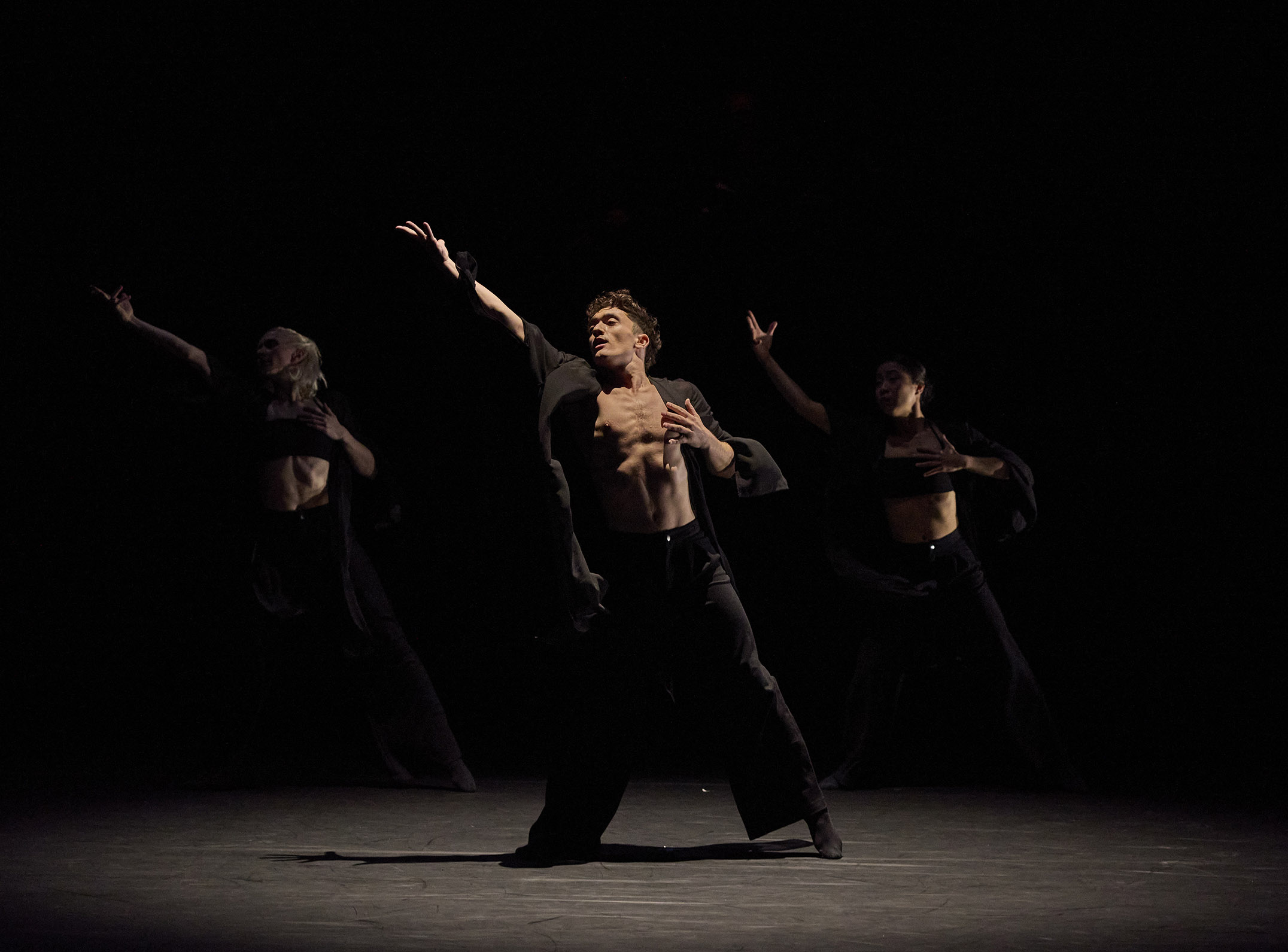
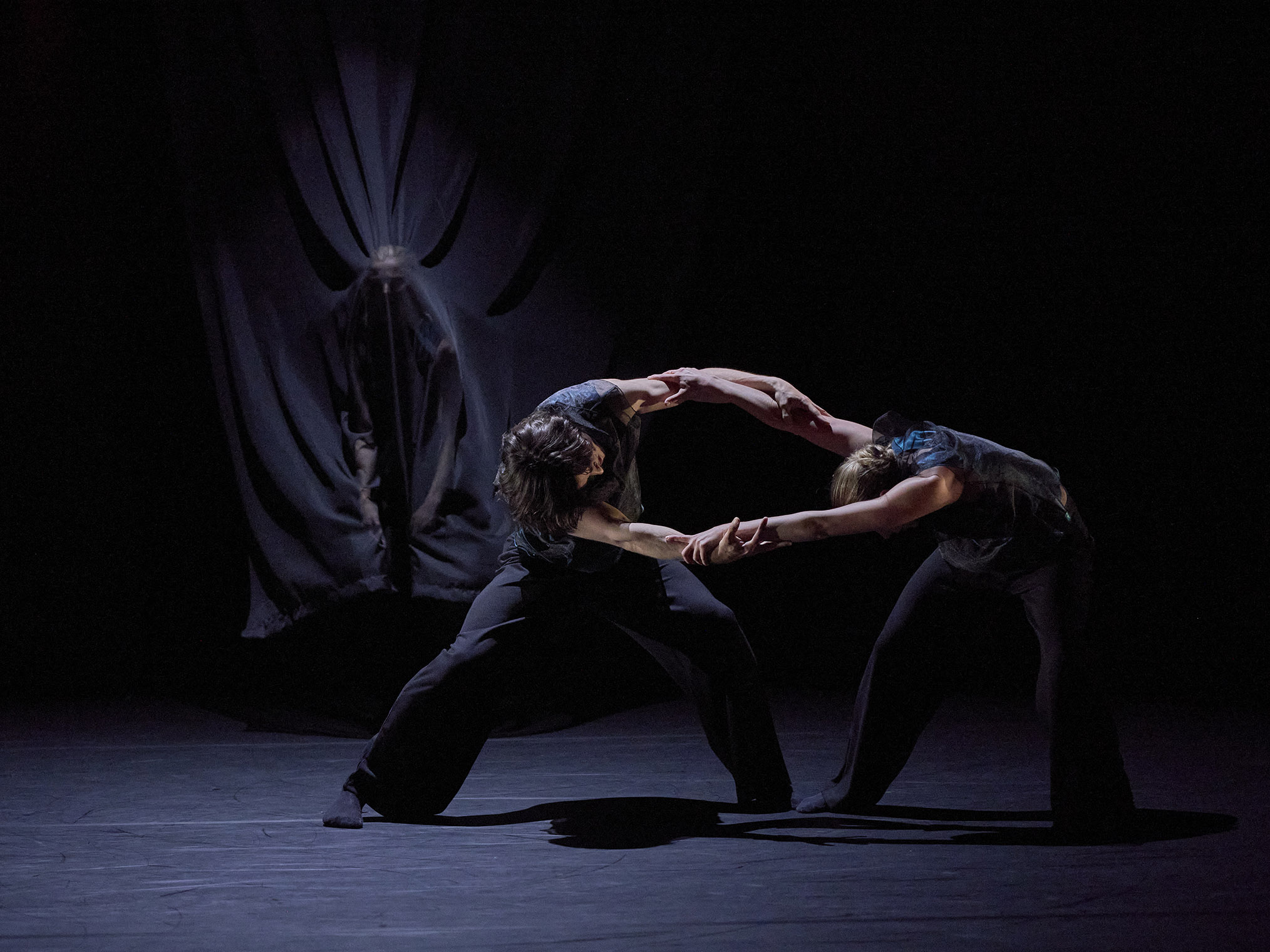
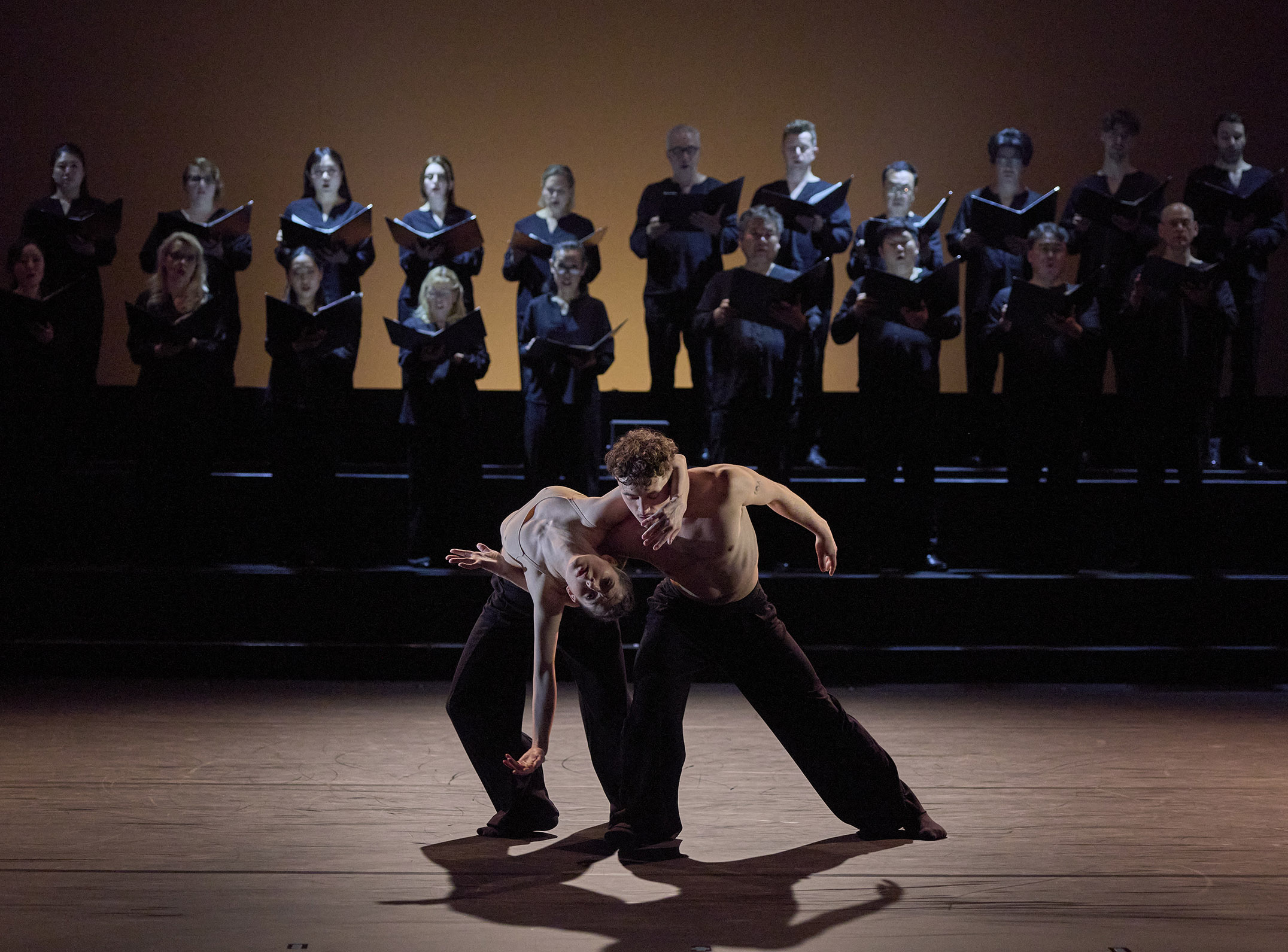
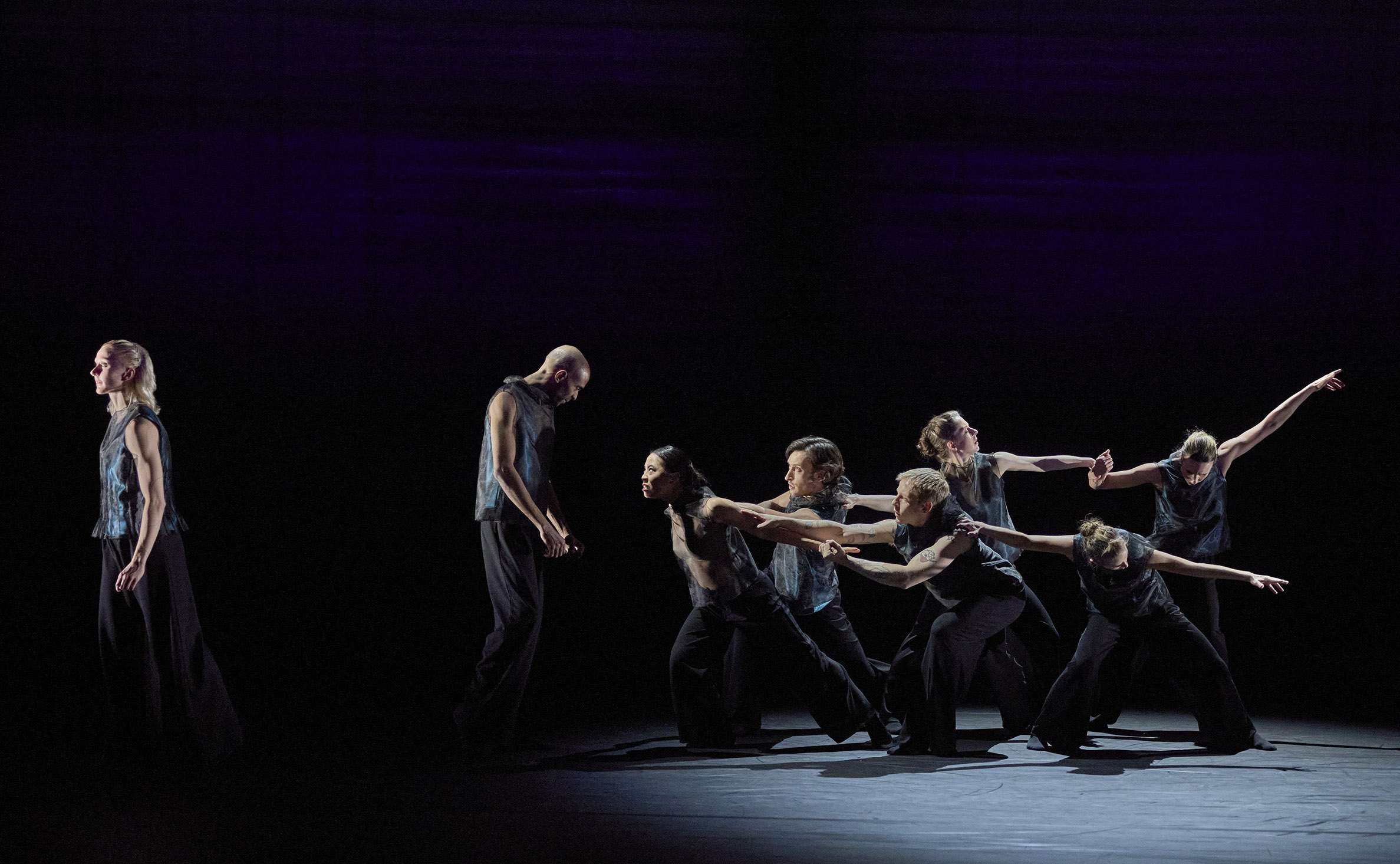
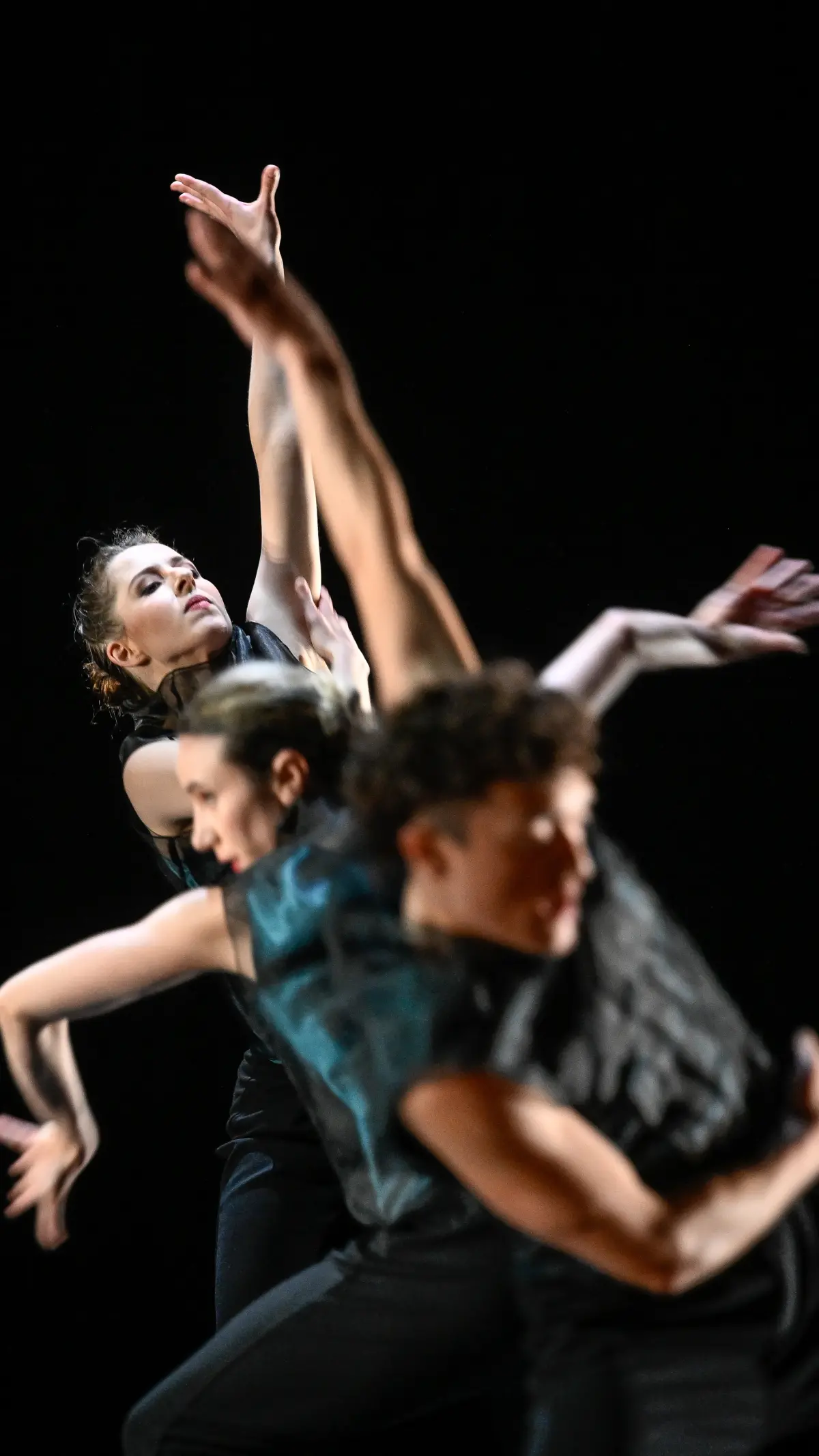
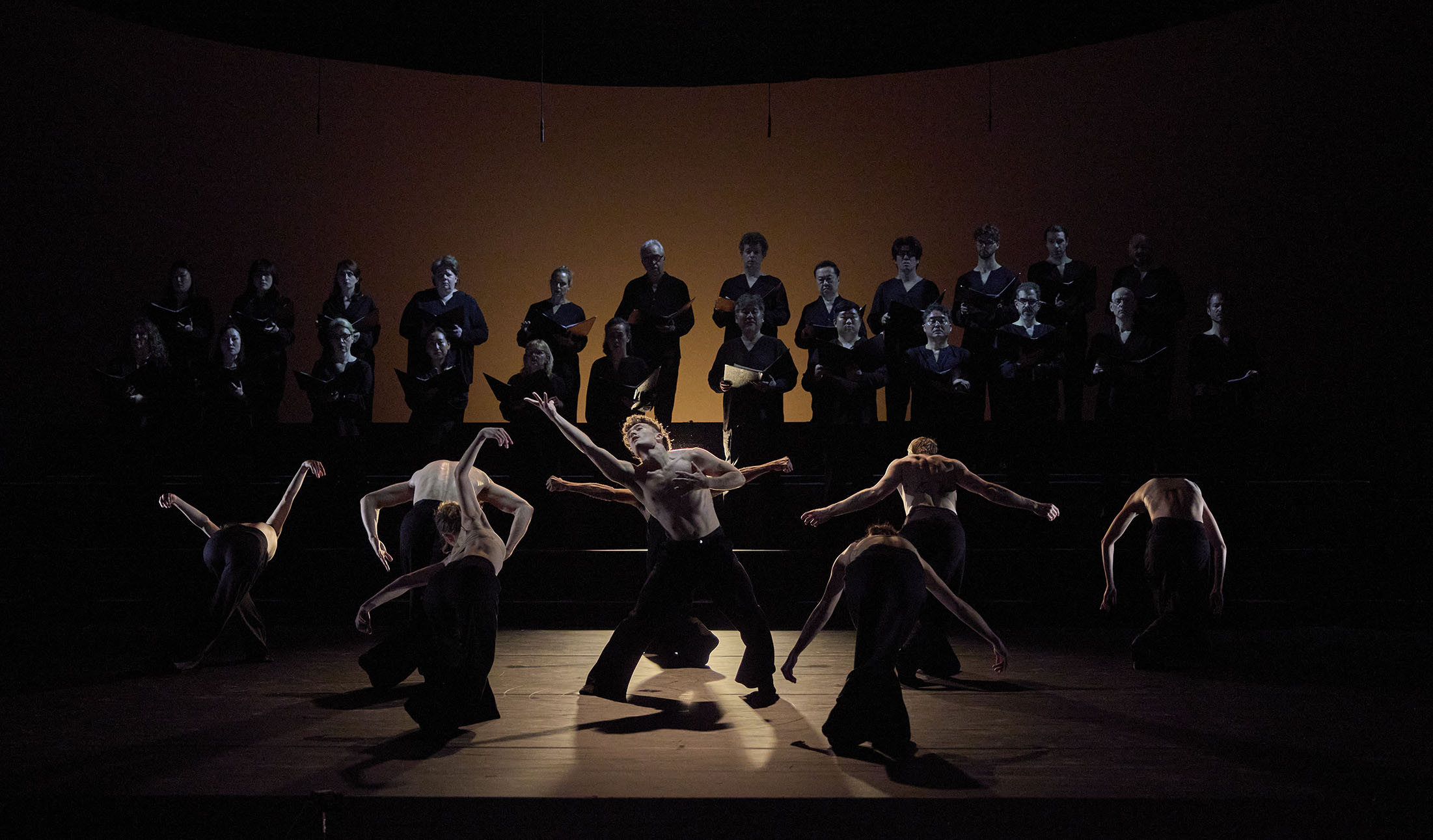
The term ‘Thin Place’ traditionally refers to places where the boundary between the earthly and the spiritual becomes thin. The concept, reinterpreted here through movement and the interaction between choir, orchestra and dancers, unfolds as a journey in which mystical visions, the human voice, sound and movement intertwine in an attempt to recreate the very experience encapsulated by the term.
The contrast between the otherworldly vibrations of Eric Whitacre’s choral pieces and the earthly power of Ezio Bosso evokes a dialogue between heaven and earth, in which the dancers intervene as distinct voices amidst harmonies and dissonances, the individual and the group, the metaphysical and the human.
The work is the first commission for the Mainfranken Theater Würzburg and forms part of the ‘Vox et Spiritus’ programme, shared with Virginie Brunelle and the director Dominique Dumais.
_Ingrao’s work is a magical fairy tale and a musical featuring a harmonious design—a visual aesthetic also curated by Ingrao himself. The poetry manifests in a composition by Mariangela Gualtieri, the German translation of which should absolutely be read in the program prior to the performance. "Life needs a body to exist; so be gentle with every body." These are intense impressions, ranging from joy to sorrow, and a captivating work for which Ingrao received resounding applause._
(Mathias Wiedemann)
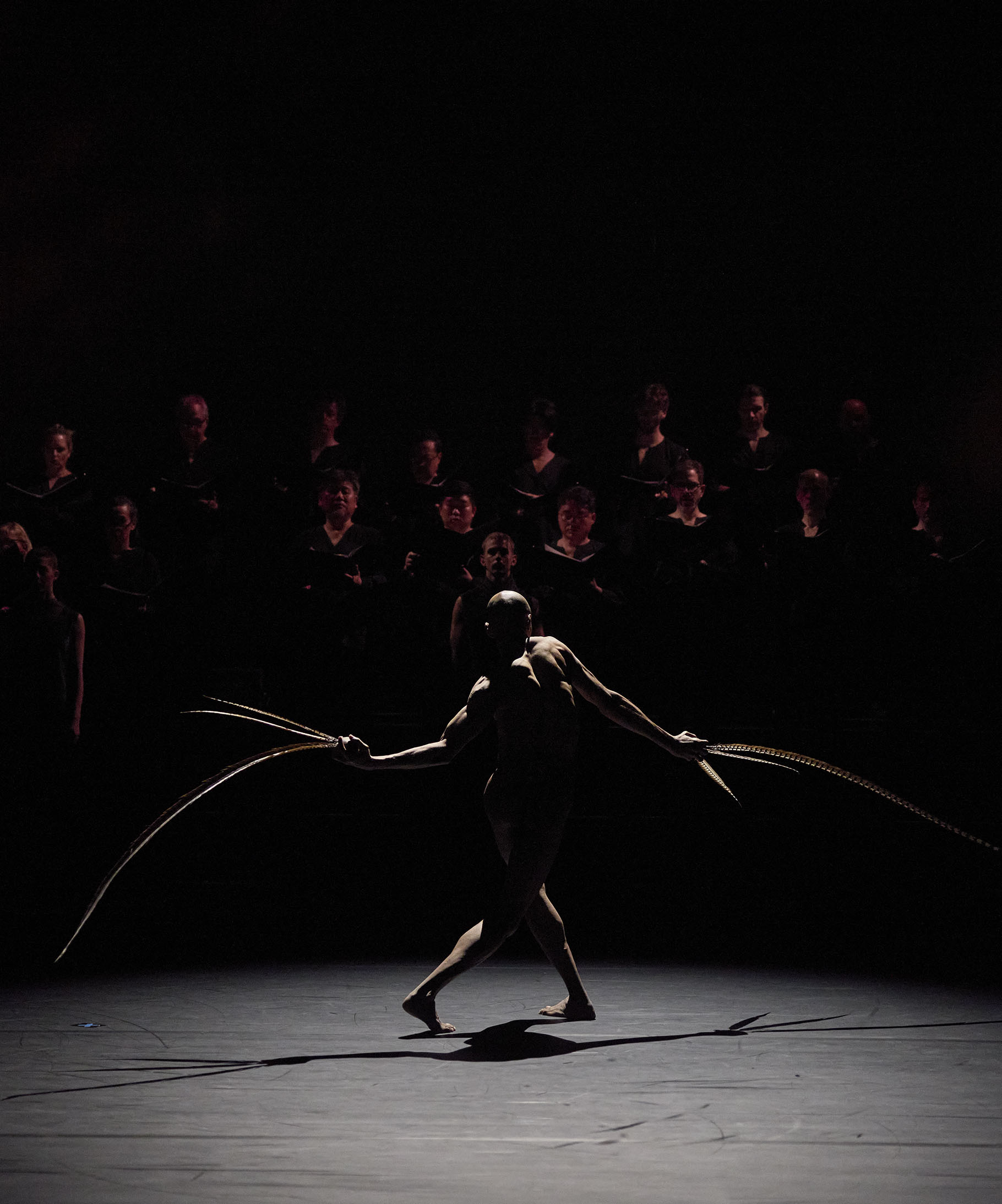
_In the second part of the evening, "Thin Place"—choreographed by Mirko Ingrao, a member of the ballet company—the audience is initially perplexed by the significance of a curved, brown, bird-like figure with excessively long fingernails, which subsequently vanishes shortly thereafter. Later, electronic sounds of birdsong and similar noises are heard, yet no explanation is provided. Similarly, the lengthy poem by Mariangela Gualtieri—recited in a mysteriously incantatory manner (and translated in the program)—a text that calls for gentle conduct within physical existence, may be interpreted as an expression of respect for all living creatures; however, its true meaning can only be grasped in retrospect. The dance movements—the gestures of the arms, the formation of groups and couples, and the various compositional arrangements—mirror, through their repetitive patterns, both the highly similar musical pieces and the extended spoken text. The dancers eventually settle into a state of calm, until everything fades away and the piece concludes with movements of liberation._
(Renate Freyeisen)